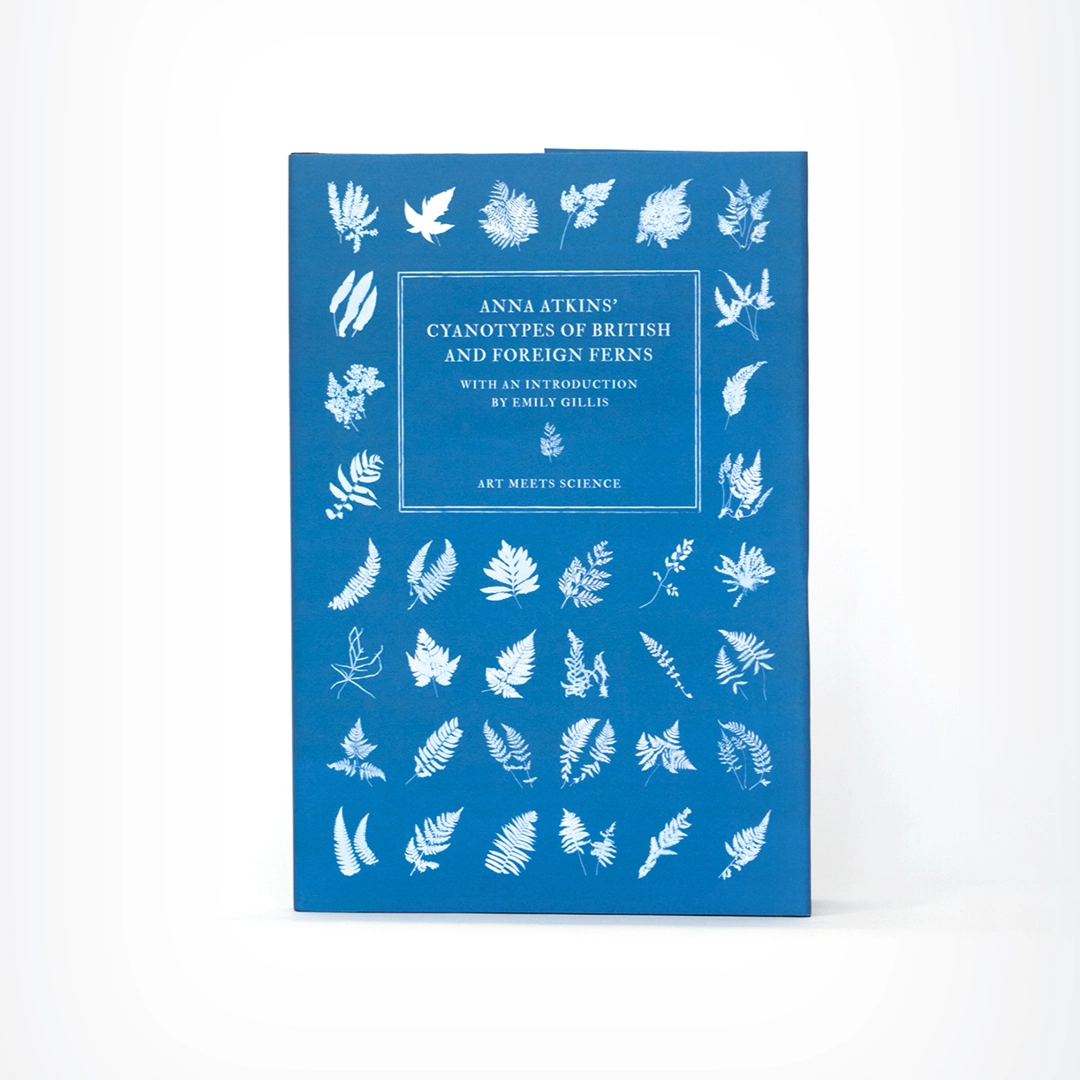
Front Cover of Anna Atkins' Cyanotypes of British and Foreign Ferns by Anna Atkins ISBN:9781528721646

Anna Atkins’ Cyanotypes of British and Foreign Ferns

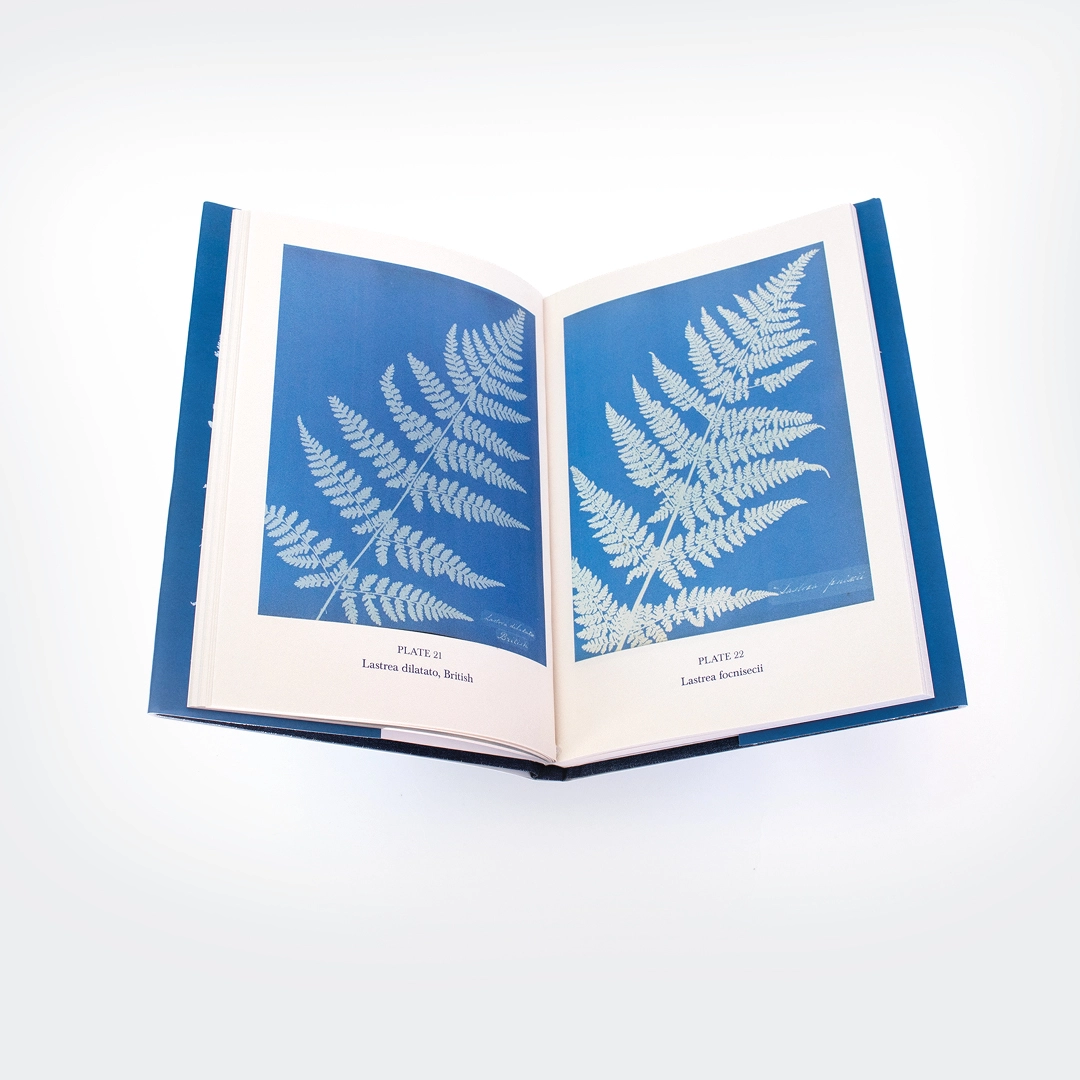
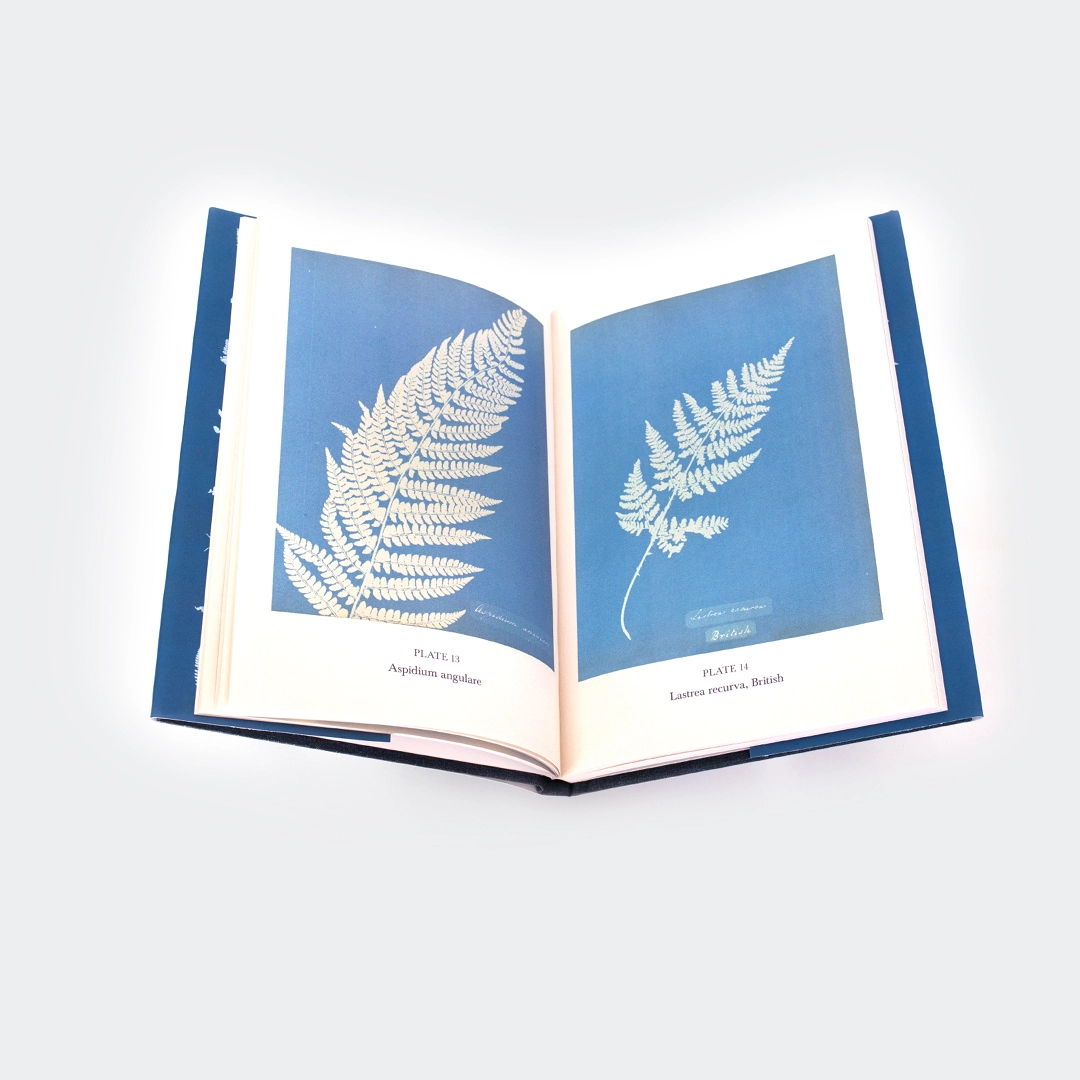
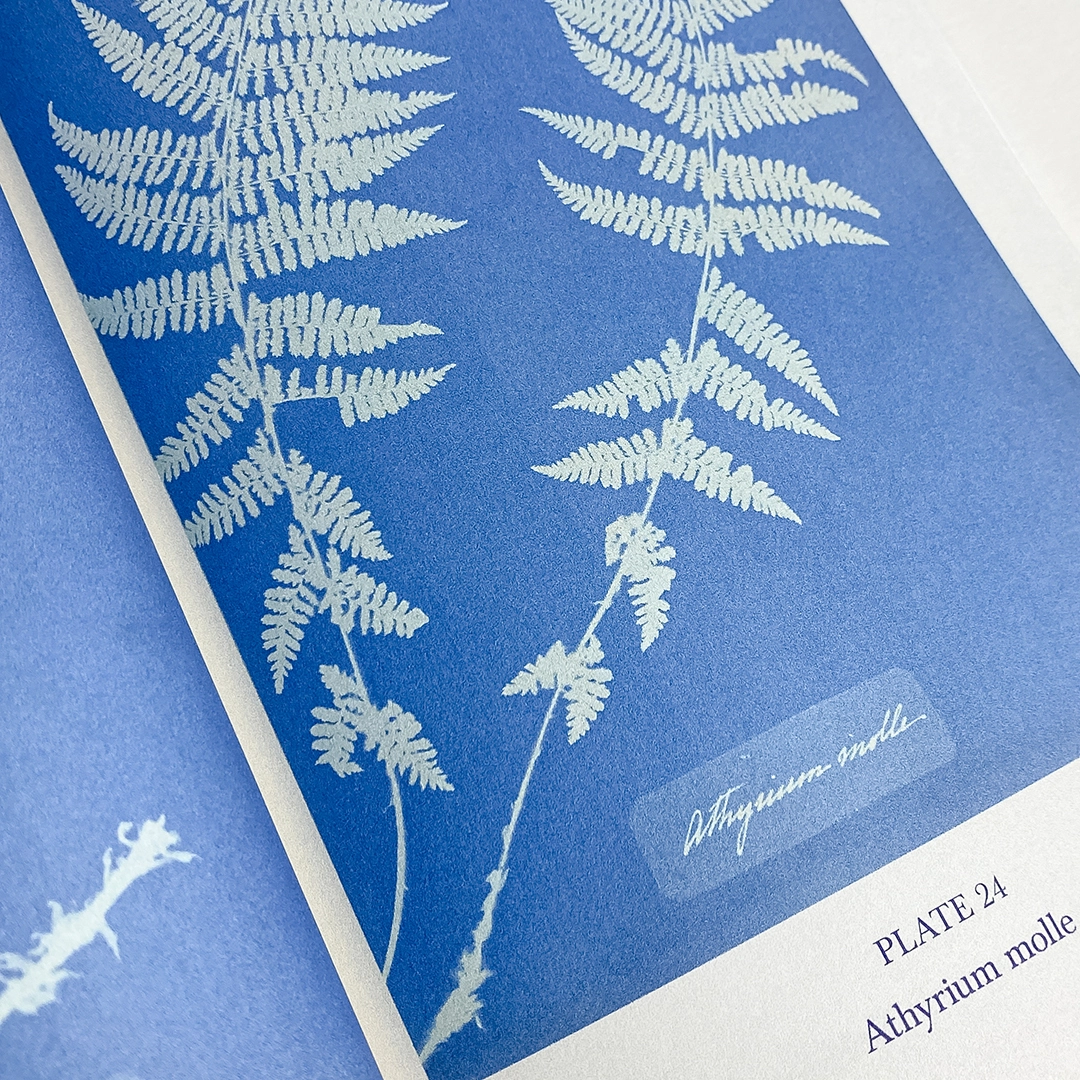
A collection of deep Prussian-blue photograms by the photographic pioneer Anna Atkins, Cyanotypes of British and Foreign Ferns renders over 100 fern specimens in luminous white silhouettes.

Book Description

A collection of deep Prussian-blue photograms by the photographic pioneer Anna Atkins, Cyanotypes of British and Foreign Ferns renders over 100 fern specimens in luminous white silhouettes.

A pioneer in her field, Anna Atkins was an English botanist and one of the earliest women to work in photography. Her first volume, Photographs of British Algae (1843) – widely regarded as the first book illustrated with photographs – is a landmark in the history of both publishing and science.

This later volume, Cyanotypes of British and Foreign Ferns (completed in 1853), turns the early photographic process into a remarkable collection of botanical blueprints, capturing the fine detail of nineteenth-century British botany with a clarity that feels wholly modern.

Reproduced in their original detail and published with a new introduction, this collection stands as both early photographic art and the achievement of a pioneering woman of science.

Publisher's Note

Photographers, botanists, and anyone drawn to that unmistakable cyanotype blue will find their book in Anna Atkins’ Cyanotypes of British and Foreign Ferns – camera-less impressions by one of the first women to take up photography.

The early photography methodology and process is so tactile; you can imagine Atkins’ working to print each plate, taking care to prepare, shoot, and wash each one. You can even see the pinholes where she hung the prints up to dry. The idea of her collecting and documenting each plant is almost as romantic as the cyanotype method she used. This volume of prints feels like her love letter to botany: it’s personal, beautiful, and groundbreaking.”

“I first came across Anna Atkins in photography class at school. Her images were used as an example because they were so different from the traditional photography styles we were used to. The beautiful, monochromatic blue-and-white forms are captivating when you study them as illustrations, but unfortunately for Anna, the context of how they came to be took a back seat. It was only when I rediscovered the work later on that their story really brought them to life.”—Emily, Editor

Additional information

Weight 257.1912 g
Dimensions 6.14 × 9.21 in
ISBN

9781528721646, 9781528773379, 9781528798846

Formats Available

, ,

Pages

128

Publication Date

25 September 2023

Book Features:

  • A facsimile of Anna Atkins’ 1853 Cyanotypes of British and Foreign Ferns.
  • Over 100 cyanotype plates of fern specimens in Prussian blue and white.
  • An inspiring work by the first woman known to publish a book illustrated with photographs.
  • A cornerstone of early photography and one of the most beautiful records of British and foreign ferns.
  • A distinctive gift and coffee table book for lovers of botanical art, cyanotype printing, and vintage photography.

Table of Contents:

Contents:

  • Introduction
  • John Herschel on the Cyanotype Process, 1842
  • List of Plates
  • The Cyanotype or Blue Process
  • Biography of Anna Atkins

Editorial Reviews:

“If the photograph in its early and imperfect scientific state was more consonant to our feelings for art, it is because… it was more true to our experience of Nature. Mere broad light and shade, with the correctness of general forms and absence of all convention, which are the beautiful conditions of photography… give artistic pleasure of a very high kind.”—Lady Elizabeth Eastlake, 1857

Extract

At the turn of the century, only certain hobbies were deemed acceptable for women because of their genteel nature. Along with painting, sewing, and housekeeping, botany was popular due to its association with flowers and femininity. Boasting an unusually scientific education under the tutelage of her father and his friends, Atkins developed a passion for botany, collecting and studying specimens for her collection. In 1825 she married John Pelly Atkins, a merchant of India and railway promoter, which gave her the time and means to dedicate to her botanical interests. On her travels, and through those of her friends, she collected rare specimens from around the world for her studies.

Corresponding mostly through her father, she gained much of her botanical knowledge through his friend and colleague Sir William Hooker, an established botanist and director of Kew Gardens. In a letter to Hooker on behalf of his daughter, Children states: “I am only the channel of communication. [Atkins] considers you as her tutor in botany, as what little knowledge she possesses in the science has been chiefly derived from your works.”

Her first foray into capturing botanical specimens followed the traditional method of drawing or painting as she produced illustrations for her father’s translation of Lamarck’s Genera of Shells in 1823. Predating the advent of photography, authors relied on lengthy descriptions of specimens in their works to envisage their subjects and often pasted in hand-made illustrations and sketches or dried examples of specimens themselves, none of which provided comprehensive examples for their studies. Atkins changed the face of scientific documentation when she produced her vibrant, blue volumes of cyanotypes. Her landmark publications are now regarded as the first books illustrated with photographic illustrations, utilising the newest technology to create something never before seen in the publishing world.

—From the Introduction

More About This Work

By 1839, photography had been introduced in Britain by William Henry Fox Talbot – a close acquaintance of the Atkins family. It was through this connection that Anna Atkins learnt first-hand about new photographic inventions. Passages in Talbot’s journals reveal that he sent her and her father his first memoir on photography along with some of his first photographic prints. The photographic process that would become Atkins’ signature, the cyanotype, was developed by scientist and close friend Sir John Herschel in 1842 as an independent development on Talbot’s earlier methods. The process began by mixing two iron-based compounds and brushing the mixture over the paper’s surface, leaving it to dry. The object to be photographed was then placed on the surface of the treated paper under a glass plate and exposed to sunlight for several minutes. The paper was then washed clean. Where the light struck, the paper turned a brilliant Prussian blue; where the object lay, it stayed white – leaving the crisp silhouette on the page.

A Victorian botanical illustration of diverse fungi species by Anna Maria Hussey, a pioneering female mycologist and scientific illustrator.
Pages-from-Firework_art-of-fireworks_504h