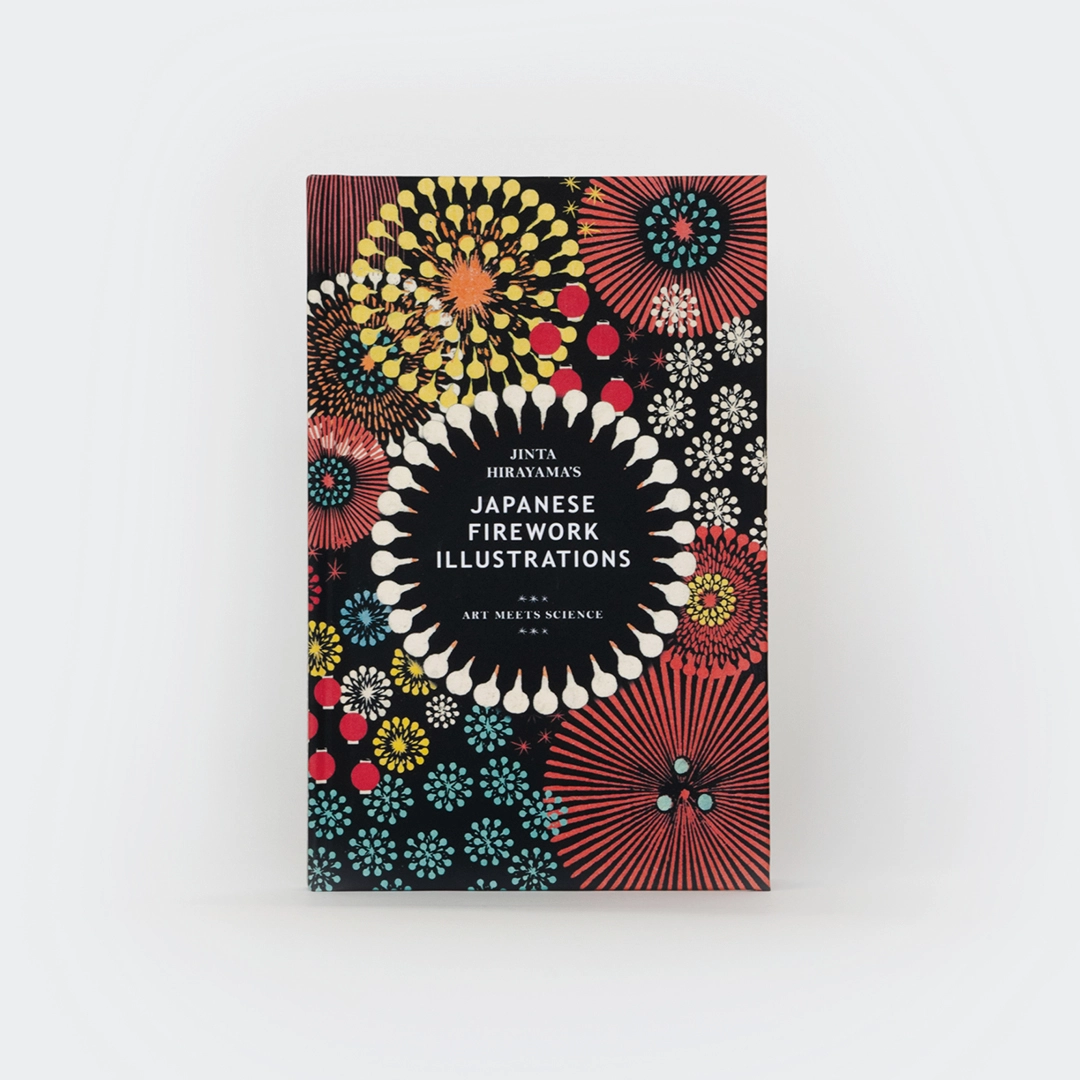
Front Cover of Jinta Hirayama's Japanese Firework Illustrations by Jinta Hirayama ISBN:9781528724234

Jinta Hirayama’s Japanese Firework Illustrations

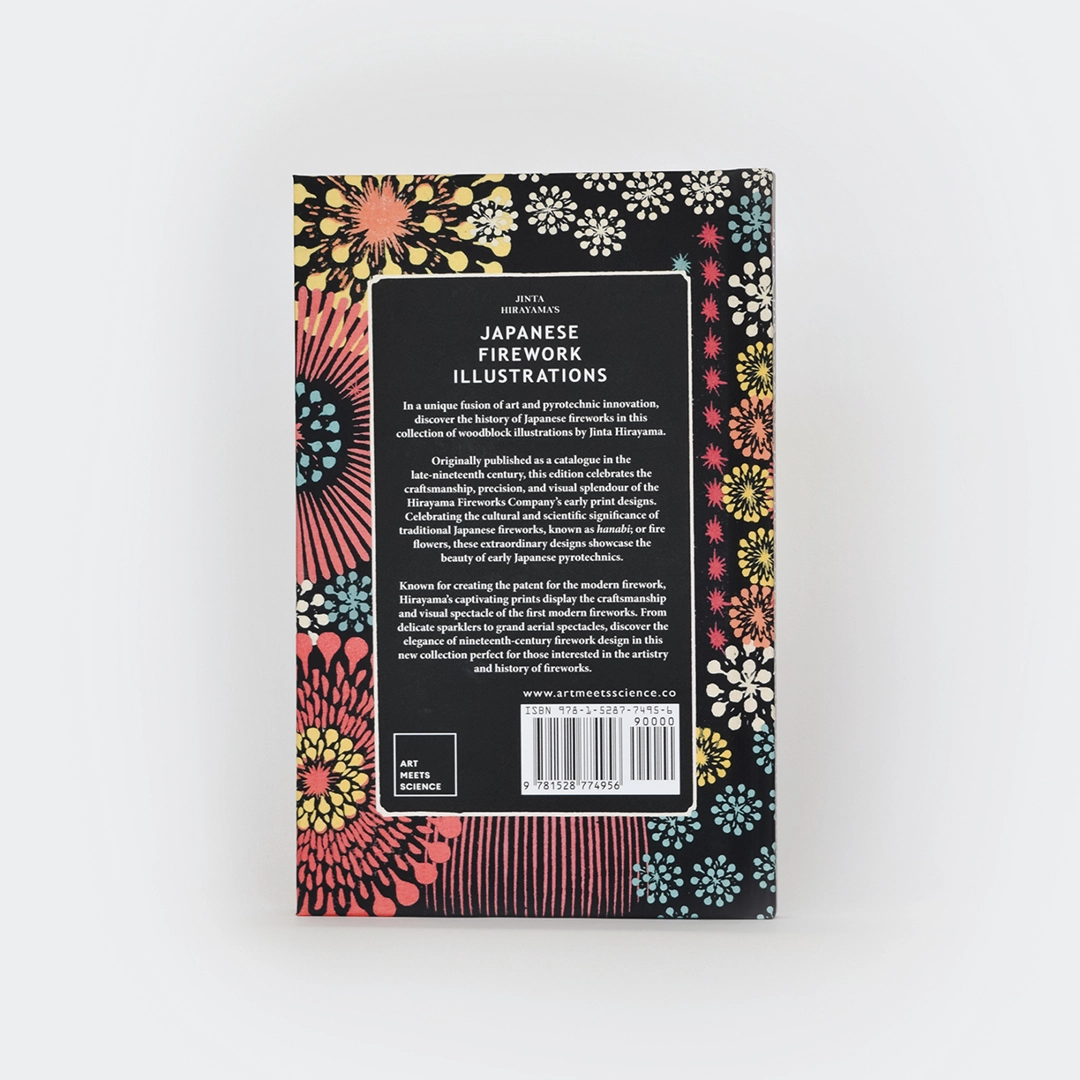
The bold and colourful woodblock prints of Jinta Hirayama’s Japanese Firework Illustrations turn the trade catalogue of a Japanese fireworks company into some of the most striking graphic art of their age.

Book Description

The bold and colourful woodblock prints of Jinta Hirayama’s Japanese Firework Illustrations turn the trade catalogue of a Japanese fireworks company into some of the most striking graphic art of their age.

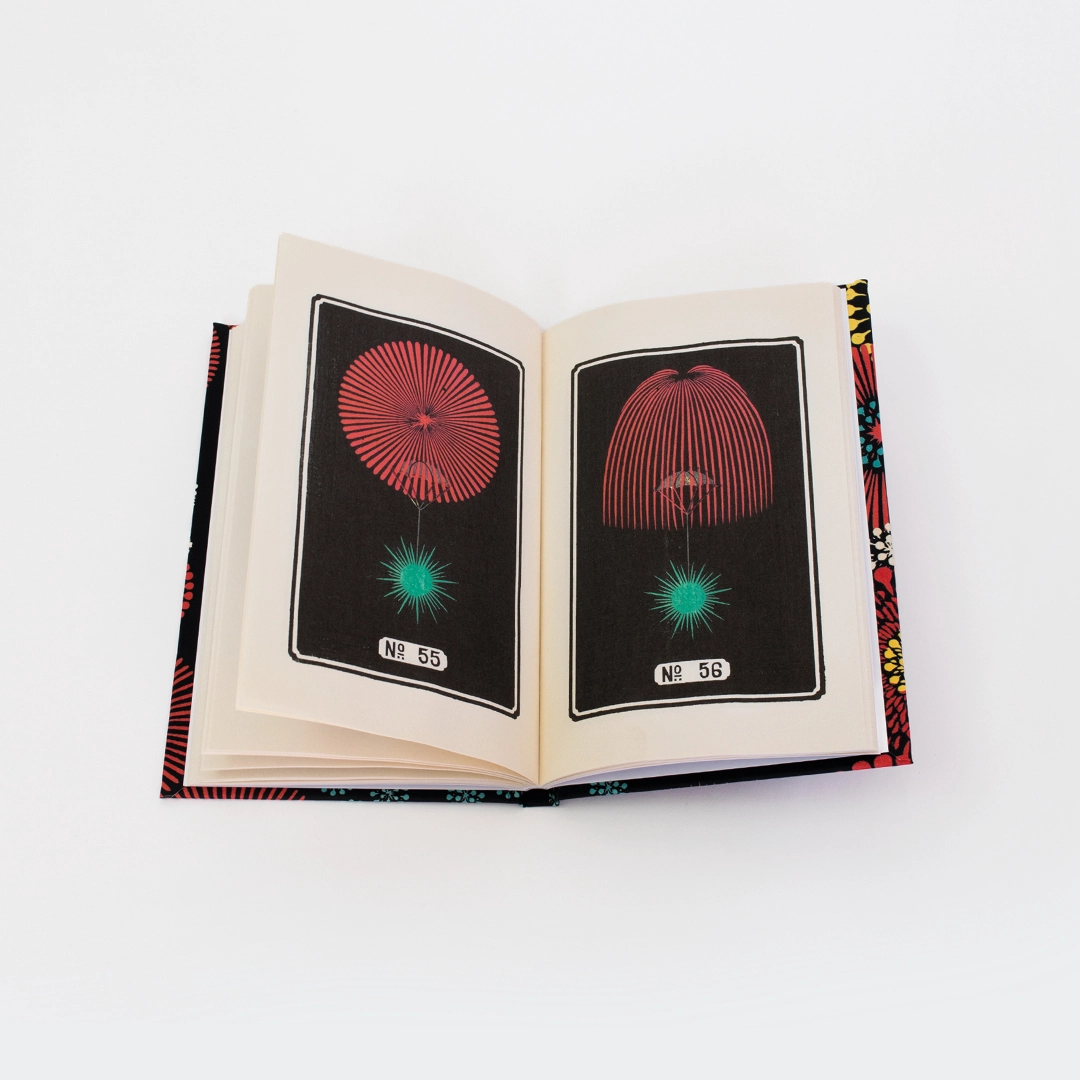
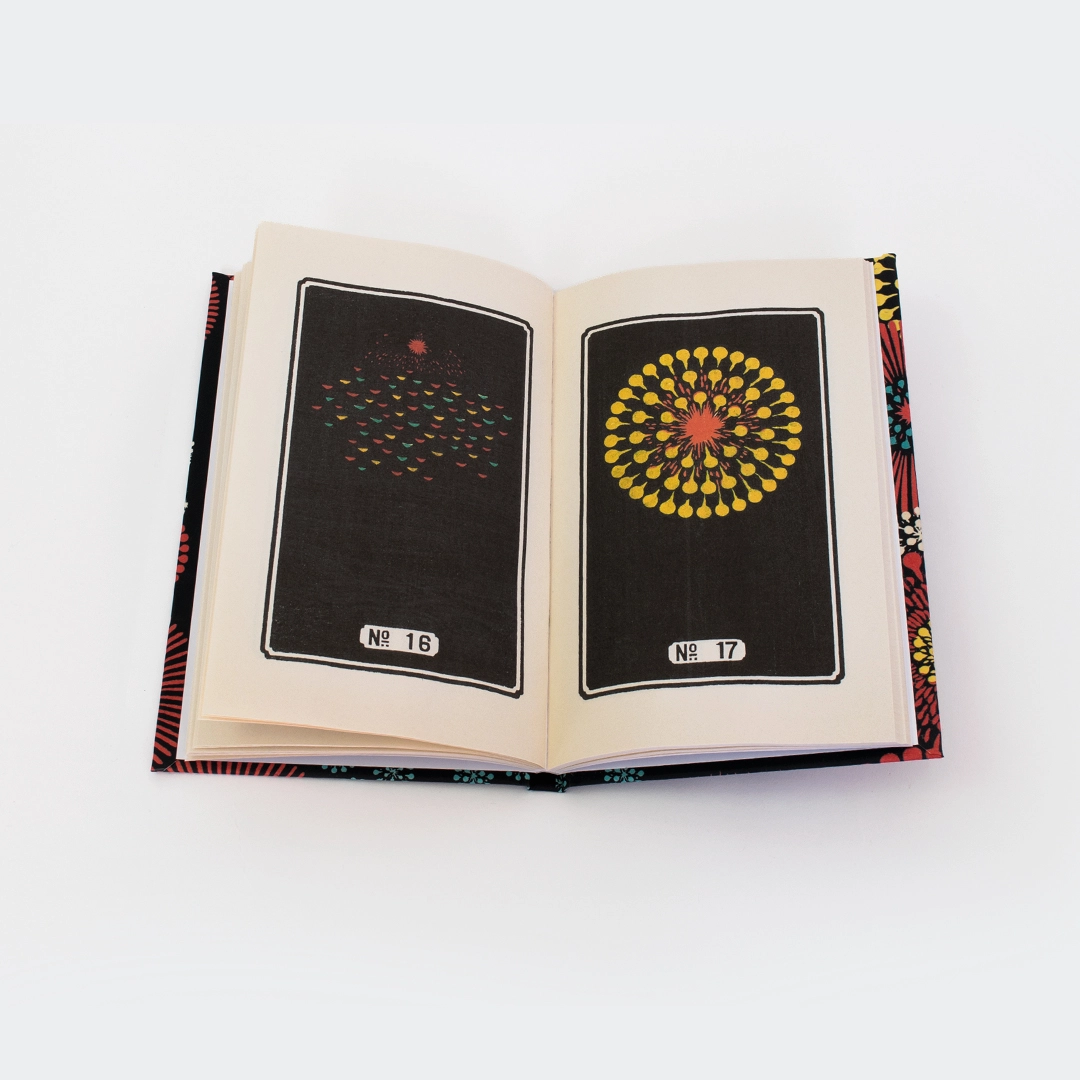
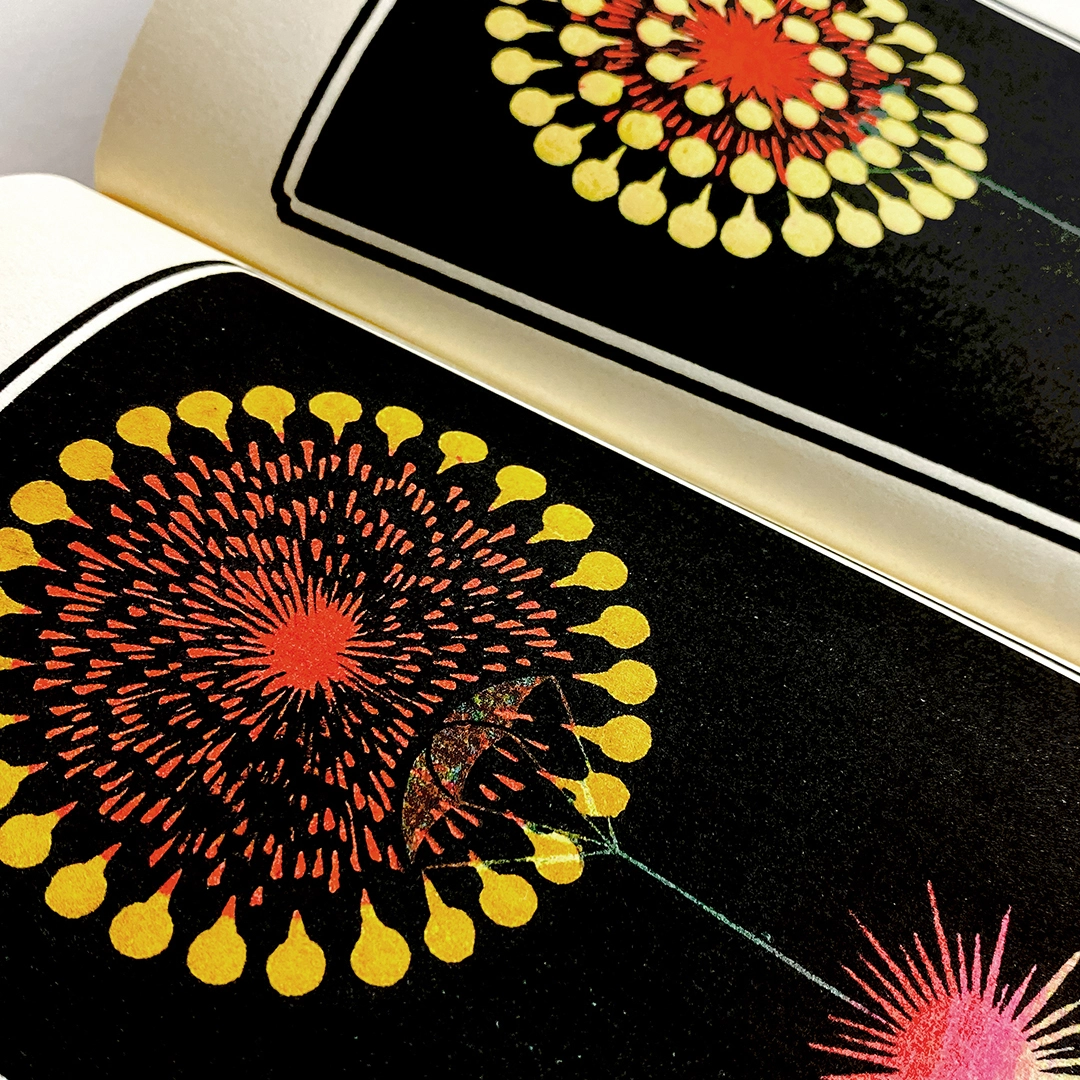
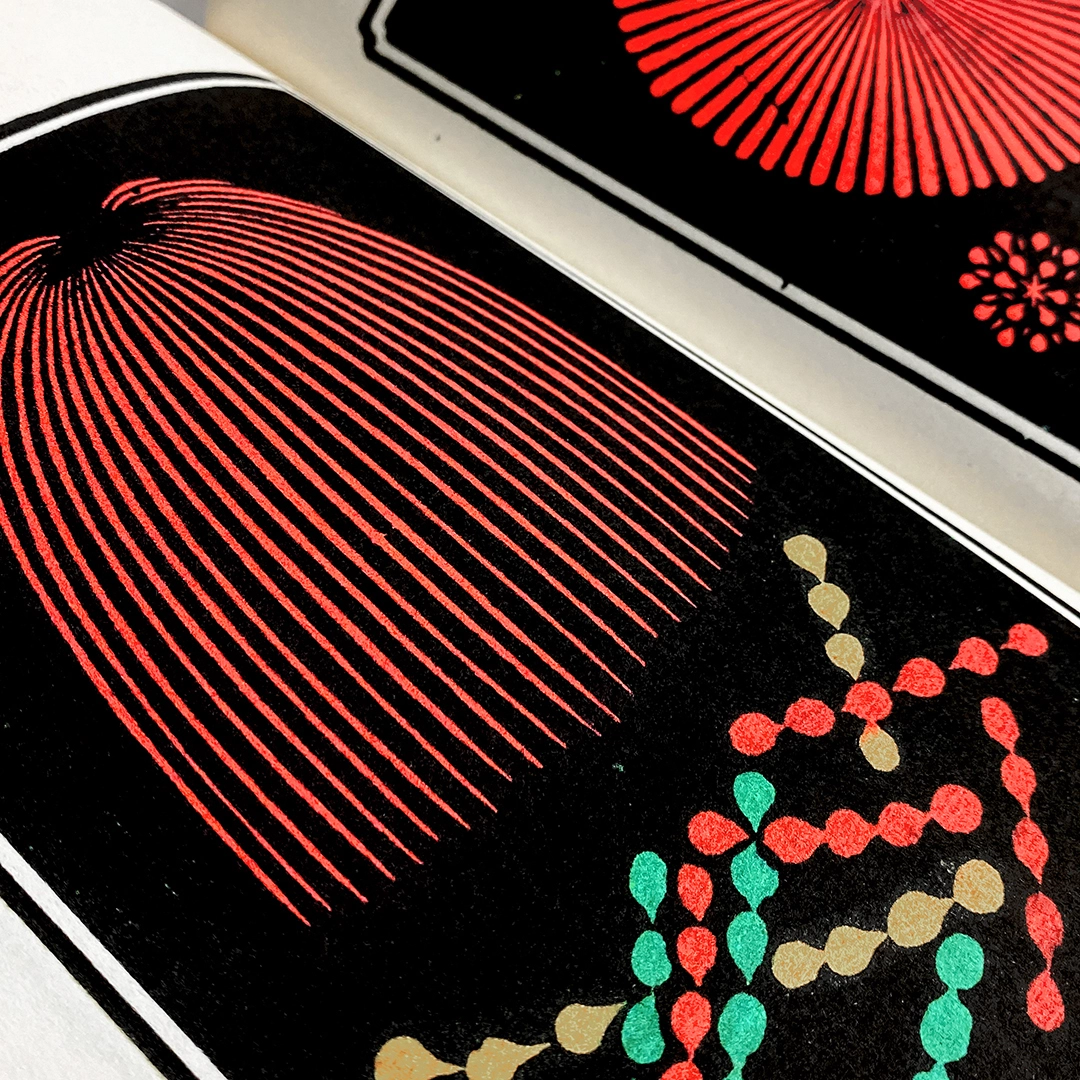
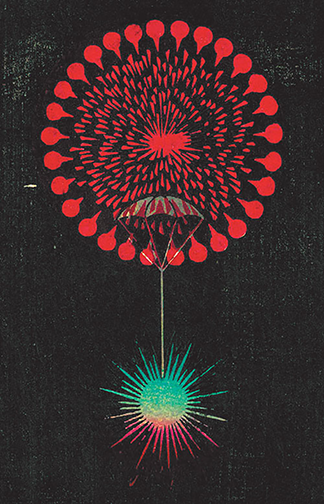
Founded in Yokohama in 1877, the Hirayama Fireworks Co. sold its wares overseas through illustrated catalogues. Its designs were cut as ukiyo-e prints, in the same tradition as Hokusai, Hiroshige, and the great artists of the Floating World. Each firework is captured at the moment it bursts – a shower of shapes and colour against a deep black background, rendered in the clean line and flat colour of the traditional woodblock style.

From the 1880s onwards, Hirayama’s catalogues set down different styles of Japanese fireworks using a craft that turned them from commercial documents into works of art. He was the first Japanese citizen to obtain a US patent for his designs, leaving behind a record of hanabi at its height: the fleeting spectacle, held fast in one of Japan’s oldest art forms.

This edition presents a facsimile of the woodblock plates in their original sequence from the 1883 catalogue, alongside additional writings on the history of pyrotechnics and Japanese printmaking. It reframes fireworks not simply as entertainment but as objects of craftsmanship, design, and cultural significance.

Publisher's Note

For the designer, the print collector, and anyone drawn to Japanese art, Jinta Hirayama’s Japanese Firework Illustrations gathers the woodblock prints of hanabi, Japan’s ‘fire flowers’, in striking graphic form.

The craftsmanship and dedication to a centuries-old Japanese art form for the purposes of advertising is what makes these firework prints worth looking at as artefacts rather than catalogues. While researching the history of Japanese pyrotechnics, we discovered the early chemical experiments behind the displays – the inclusion of ink and onion juice to create coloured effects on explosion, somewhat whimsical additions to a discipline we now think of as strictly measured. What we enjoy most about Hirayama’s prints is the contrast between the subject and the creative method: woodblock printing, slow and hand-cut, used to record the newest developments in chemical engineering. Where scientific advancement, creative expression, and a long-held sensitivity to the transience of things all come together. Here, a heritage art form meets fast-paced modern science, distilling nineteenth-century Japanese culture at its peak.

“The fact that these firework prints were created as marketing material still astounds me. The contrast between the fleeting subject matter and the bold graphic design makes these prints entirely captivating.”— Emily, Editor

Additional information

Weight 161.028 g
Dimensions 5 × 8 in
ISBN

9781528724234, 9781528774956, 9781528756624

Formats Available

, ,

Pages

112

Publication Date

09 October 2025, 13 October 2025

Book Features:

  • Facsimile plates reproduced from the Hirayama Fireworks Company’s late-nineteenth-century catalogue.
  • Woodblock-printed illustrations of traditional Japanese hanabi (fire flowers).
  • Designs by Jinta Hirayama, the first Japanese citizen to hold a US patent for his fireworks.
  • Ukiyo-e prints in the style of Hokusai and Hiroshige.
  • A unique gift and coffee table book for lovers of Japanese art, print design, and fireworks.

Table of Contents:

Contents:

  • The History of Hanabi
  • The Origin of Pyrotechny by Alan St. Hill Brock, 1922
  • The Chemistry of Coloured Fire by Alan St. Hill Brock, 1922
  • The Rise of Print-Designing: The Birth of the Ukiyo-e School by A. Davidson Ficke, 1915
  • Japanese Prints by Charles Hovey Pepper, 1905
  • Illustrated Catalogue of Night Bomb Shells: The Hirayama Fireworks Co.
  • United States Government Letters Patent
  • Plates
  • Bibliography

Extract

しばらくは闇のともしを花火哉
shibaraku wa yami no tomoshi wo hanabi kana

for a moment
our darkness is lit…
fireworks


—Kobayashi Issa (1763–1828)

Fireworks were a perfect curio for the newly born city of Edo, known as the Floating World, or Ukiyo, whose cultural identity centred on frivolity, decadence, and aesthetics. Its name was coined from a Buddhist idea about the impermanence of life, transforming the notion of transient existence into a celebration of the present moment and of ephemeral beauty – a concept perfectly caught in the imperfect, impermanent, and liberating nature of the firework. Hanabi reflect the philosophical cast of Japanese culture and its focus on the deeper meaning of life, while also leaning into the jubilant sentiment of the early Edo period, the notion of the Floating World, and its new cultural identity.

The artists of the Floating World found in fireworks a natural subject. Their woodblock prints, ukiyo-e, reflected the transient pleasure and hedonistic indulgence of Edo. Masters of the form such as Utagawa Hiroshige (1797–1858) created thousands of prints that captured the essence of Edo culture at its height. Hiroshige’s One Hundred Famous Views of Edo boasts all aspects of daily life, including his famous ‘Fireworks at Ryōgoku’, which catches the moment a night shell erupts over the Sumida River, to a crowd of onlookers below. In works like this, fireworks became both subject and metaphor, recurring throughout Hiroshige’s prints as a backdrop to everyday scenes. These visual representations weren’t merely decorative: they documented public spectacle, technological evolution, and a social mood that extended beyond novelty into national identity.

—From the Introduction

More About This Work

Fireworks first originated in ancient China, where alchemists stumbled upon a crude recipe for gunpowder while searching for the elixir of life. It was around the turn of the seventeenth century that they reached Japan. Through the Edo period the Japanese firework grew into an art form of its own. For most of that period, coloured explosions were limited, with very few alterations produced using natural pigments and mineral salts. It was only in the nineteenth century, as Western chemistry reached Japan, that vivid reds, greens, and blues became possible. It is exactly this moment that Jinta Hirayama’s catalogues record: the work of the first Japanese citizen to register a US patent for his designs, and a colour-printed record of Japanese firework forms, many now fallen out of use.

A Victorian botanical illustration of diverse fungi species by Anna Maria Hussey, a pioneering female mycologist and scientific illustrator.
Pages-from-Firework_art-of-fireworks_504h